How this page was made & sources
AI Grounded Summary
Open interactive summary & chat →1. Core Premise & Overview
In Más Agudo, Más Rápido y Mejor, Charles Duhigg explores the fundamental mechanisms that drive productivity in both our personal lives and professional environments. The central thesis of the book is that productivity is not merely about working harder or clocking more hours, but about learning to work smarter. In an era defined by constant digital distractions and an overwhelming influx of information, Duhigg argues that individuals often struggle to manage their time effectively, leading to burnout and unfulfilled goals. The book serves as a comprehensive guide to navigating these modern challenges by providing actionable strategies that allow readers to regain control over their daily activities. By examining the habits and cognitive processes of highly productive people and teams, the author demystifies the path to efficiency. Ultimately, the book aims to solve the problem of modern fragmentation, offering a roadmap for readers to align their daily actions with their long-term objectives, ensuring that time is utilized in a way that maximizes output without sacrificing quality or mental clarity.
2. Key Concepts & Core Ideas
The Science of Working Smarter
Duhigg emphasizes that true productivity is a skill that can be cultivated through specific methodologies rather than an innate talent. The book posits that by understanding how we process information and manage our focus, we can bypass the common traps of distraction. This concept encourages readers to move away from reactive work habits and toward a proactive, intentional approach to their daily schedules.
Probabilistic Thinking for Decision Making
A core pillar of the book is the development of a probabilistic mindset, which allows individuals to make better decisions under uncertainty. By learning to view outcomes as a range of possibilities rather than binary results, readers can improve their judgment and strategic planning. This analytical framework is essential for navigating complex professional environments where clear-cut answers are rarely available.
Team Dynamics and Efficiency
The book extends its focus beyond the individual to examine how teams can function at their peak. Duhigg provides insights into the structures that foster high-performing groups, suggesting that productivity is often a byproduct of how information is shared and how members interact. These strategies are designed to help leaders and team members alike create environments that prioritize collective success and streamlined communication.
3. Key Takeaways & Lessons
- Master Information Management: Learn to filter and organize the vast amount of data you encounter daily to ensure that your focus remains on high-impact tasks.
- Develop Probabilistic Thinking: Train your brain to evaluate decisions based on potential outcomes and probabilities, which leads to more resilient and effective long-term planning.
- Eliminate Distractions: Implement specific methods to shield your attention from the modern world’s constant interruptions, allowing for deeper, more efficient work sessions.
- Align Daily Goals: Create a structured plan that connects your immediate daily activities to your broader life objectives, ensuring that every hour spent contributes to your ultimate vision.
- Optimize Team Collaboration: Apply proven strategies to improve how you work within a group, fostering a culture of efficiency and shared responsibility.
- Work Smarter, Not Harder: Shift your mindset from simply increasing your workload to refining your processes, allowing you to achieve more in less time.
4. Who Should Read This
This book is essential reading for professionals, managers, and individuals who feel overwhelmed by the demands of the modern workplace and struggle to maintain focus. It is particularly well-suited for those looking to optimize their personal efficiency and for team leaders seeking practical, evidence-based strategies to improve group performance.
5. Critical Evaluation & Conclusion
Más Agudo, Más Rápido y Mejor stands out as a highly practical resource that bridges the gap between theoretical productivity research and real-world application. By grounding his suggestions in concrete examples and actionable processes, Charles Duhigg provides a valuable toolkit for anyone looking to navigate the complexities of the modern world. The book’s strength lies in its ability to transform abstract concepts—such as decision-making and team dynamics—into clear, manageable habits. It is an impactful contribution to the self-help genre, offering a balanced approach that respects the reader's need for both efficiency and meaningful progress in their personal and professional lives.
Similar Books
Atomic Habits
James Clear
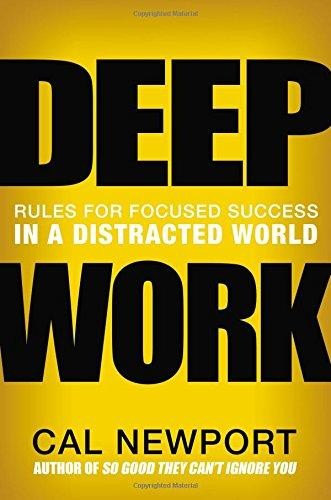
Deep Work
Cal Newport
The Power of Habit
Charles Duhigg
Essentialism
Greg McKeown
Peak
Anders Ericsson, Robert Pool
Grit
Angela Duckworth
Flow
Mihaly Csikszentmihalyi
Mindset
Carol S. Dweck
The 4-hour Workweek
Timothy Ferriss
Tiny Habits
B. J. Fogg
Atomic Habits
James Clear
Deep Work
Cal Newport
The Power of Habit
Charles Duhigg
Essentialism
Greg McKeown
Peak
Anders Ericsson, Robert Pool
Grit
Angela Duckworth
Flow
Mihaly Csikszentmihalyi
Mindset
Carol S. Dweck
The 4-hour Workweek
Timothy Ferriss
Tiny Habits
B. J. Fogg